Discover the ultimate guide to T-shirt printing methods that eliminate frustration, match your design needs, and deliver professional-quality results—whether you’re printing 1 or 1,000 tees.
Introduction: Stop Settling for Subpar T-Shirt Prints
Have you ever spent hours crafting a stunning T-shirt design, only to be disappointed when the final print looks faded, pixelated, or nothing like your vision? You’re not alone.
Main Content: The 4 Key T-Shirt Printing Methods (and How to Use Them)
To solve your printing headaches, let’s dive into the details of each method, including their best use cases, quality, durability, and cost. We’ll focus on how to match each technique to your design’s needs—so you never waste time or money on a print that misses the mark.
1. Heat Transfer Printing: The Go-To for Gradients & Complex Designs
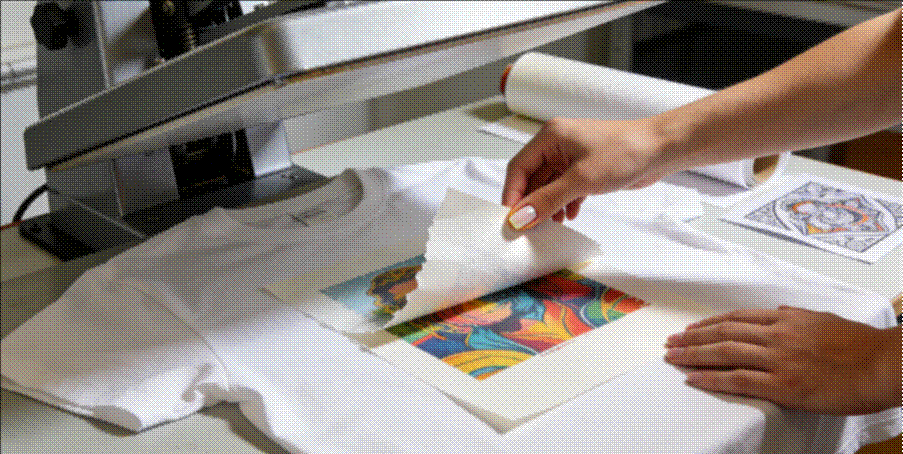
Heat transfer printing (also called heat press printing) works by transferring a design from a special paper to a T-shirt using heat (between 350–375°F) and pressure (10–15 psi). This method is a game-changer for one specific pain point: printing gradients, photorealistic images, or designs with 5+ colors. Unlike other techniques, heat transfer doesn’t limit your color palette—you can reproduce even the most intricate color blends with 95% accuracy, according to tests by Printful.
Best for: Small batches (1–50 tees), custom gifts, designs with gradients, photos, or fine details. For example, if you’re creating a T-shirt with a sunset gradient or a portrait, heat transfer will keep the colors vivid and the lines sharp.
Effect & Durability: When done correctly, heat transfer prints are soft to the touch (no stiff, plastic-like texture) and can last up to 50 washes without fading—if you use high-quality transfer paper (look for 100% cotton-compatible options). The only downside? It’s not ideal for dark-colored tees unless you use opaque transfer paper, which adds a slight thickness.
Cost: Starting at 2–5 per tee for small batches, making it 30% more affordable than screen printing for orders under 20 units.
2. Screen Printing: The Champion for Bold Logos & Large Batches
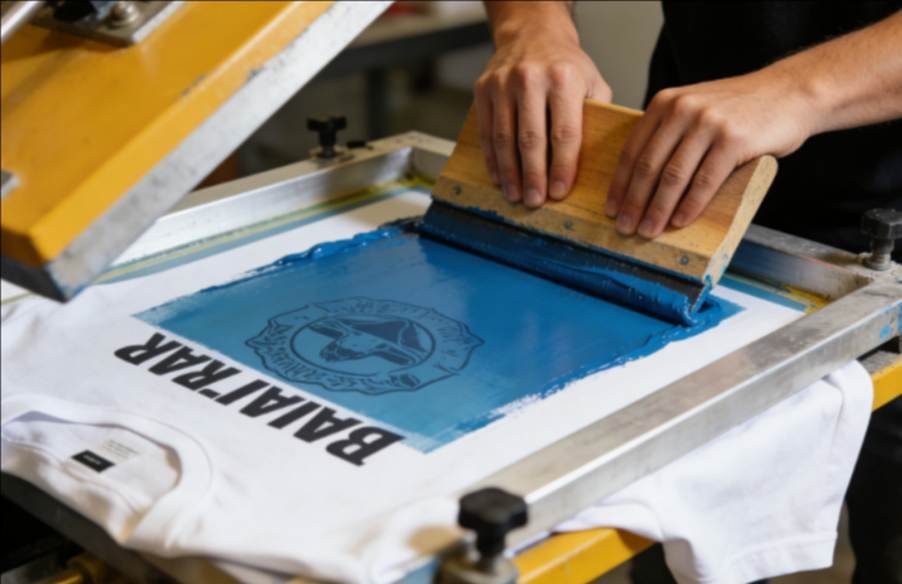
Screen printing is one of the oldest and most popular methods, using a mesh screen to push ink onto the T-shirt. It’s designed to solve a different set of problems: creating bold, long-lasting prints for large orders or simple designs. If your design has 1–4 solid colors (think brand logos, slogans, or geometric patterns), screen printing is unbeatable.