
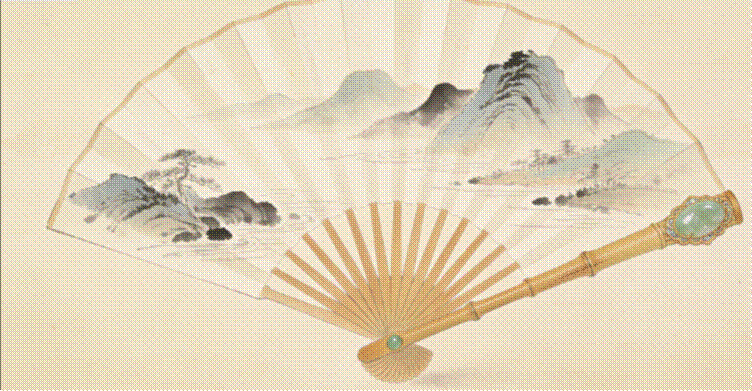
Introduction: A Fan That Whispers Centuries of Culture
In the sweltering heat of summer, a Chinese hand fan is far more than a tool for cooling—it is a portable work of art, a carrier of history, and a bridge between civilizations. For over 2,000 years, these fans have evolved from practical utensils to symbols of elegance, craftsmanship, and cultural heritage. As the great Chinese writer Guo Moruo praised, “A world of coolness is born in the hands; its craftsmanship surpasses divine creation, its ingenuity outshines nature.” Today, as intangible cultural heritage (ICH) items, Chinese hand fans continue to captivate the world with their unique charm, blending traditional artistry with timeless appeal.
The Ancient Roots: From Warring States to Ming-Qing Glory
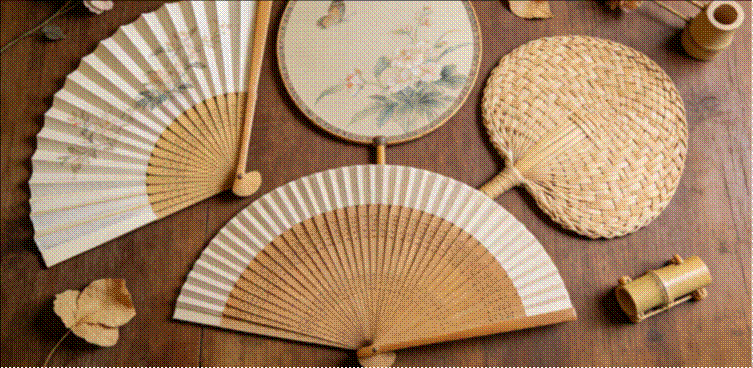
The history of Chinese hand fans dates back to the Eastern Zhou Dynasty (770-256 BCE), when the earliest known fan—crafted from delicate bamboo strips—was unearthed in Jing’an, Jiangxi Province . By the Warring States Period (475-221 BCE), painted lacquer bamboo fans emerged, showcasing exquisite weaving skills that laid the foundation for future craftsmanship. The fan culture flourished during the Ming and Qing dynasties, with Suzhou fans becoming imperial tributes and 折扇 (zheshan/folding fans) gaining popularity among literati and nobles. “In Wu Zhong (modern Suzhou), folding fans made of red sandalwood, ivory, or ebony were considered vulgar; only those crafted from brown bamboo or moso bamboo were hailed as ‘elegant treasures for sleeves,'” recorded the Ming Dynasty book Ye Huo Bian . This preference for natural materials reflected the Chinese aesthetic of harmony between humans and nature.
Masterpieces of ICH: Diverse Styles of Chinese Hand Fans
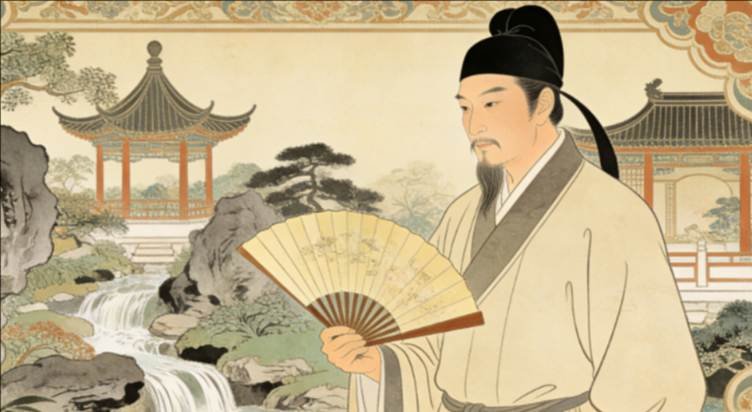
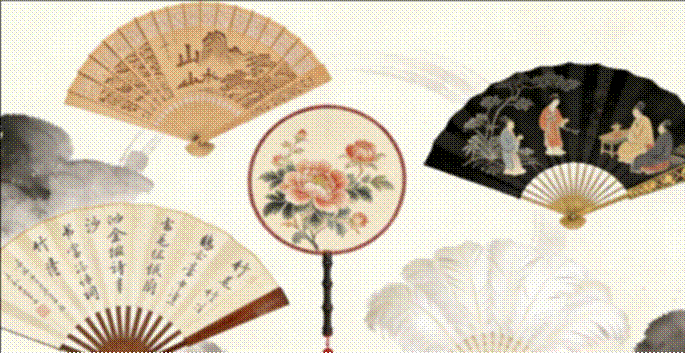
China’s ICH hand fans boast a rich variety of styles, each with distinct characteristics shaped by regional cultures and craftsmanship. Su Fan, inscribed in the first batch of national ICH in 2006, includes folding fans, sandalwood fans, and silk palace fans . Sandalwood fans from Suzhou emit a natural fragrance and feature intricate “lace-carving” and “hot-stamping” techniques, while silk palace fans are adorned with landscape paintings and poems. Wangxingji Black Paper Fan, a national ICH since 2008, is renowned for its durability—earning the praise “one fan equals half an umbrella” . Its bamboo ribs are selected from 4-6-year-old shaded bamboo, boiled, and aged for 7-8 years to ensure sturdiness.
Gong Fan (Gong’s Bamboo Weaving Fan) from Zigong, Sichuan, is another treasure. Dubbed “cicada-wing fan” for its transparency, it uses bamboo strips as thin as human hair, woven into patterns that resemble silk . Yuezhou Fan, inscribed in ICH in 2021, features 72 crafting procedures, including sawing, splitting, planing, and polishing, resulting in fan ribs as smooth as jade . Wang’s Folding Fan from Guangde, Anhui, stands out for its innovative techniques—selecting bamboo aged over 6 years, storing it for 5 years to form a natural patina, and using self-developed polishing wax for a glass-like finish .
The Art of Craftsmanship: A Labor of Love Spanning Centuries
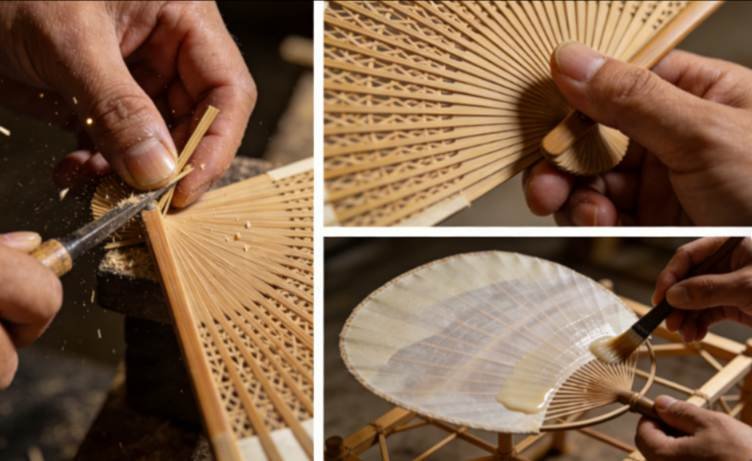
Crafting a Chinese ICH hand fan is a labor-intensive process that demands patience, precision, and dedication. For Wang’s Folding Fan, the journey begins with selecting bamboo from “Bamboo Sea Peak” in Guangde—only mature bamboo without flaws is chosen . After cutting, the bamboo is split into strips, boiled to remove insects, and air-dried for years. The fan ribs then undergo hundreds of polishing steps, with craftsmen using sandpaper of varying grits to achieve a smooth texture. “Seiko produces fine works; good materials create masterpieces,” insists Wang Mingde, the 4th-generation inheritor of Wang’s Folding Fan . At 74, he still handcrafts a limited number of fans annually, preserving techniques like “edge-binding” that ensure the fan closes tightly.
Yuezhou Fan’s craftsmanship is equally rigorous. Its fan ribs are made from Yueyang’s premium moso bamboo, which undergoes sawing, splitting, planing, filing, boiling, and sun-drying . The fan face, made of rice paper, is mounted with glue derived from fish bones, ensuring it remains intact for decades. As Joseph Addison wrote in The Spectator, “Women are armed with fans as men with swords” —this metaphor perfectly captures the artistry and significance of these handcrafted treasures, which are both functional and symbolic.
Cross-Cultural Dialogue: How Chinese Fans Conquered Europe
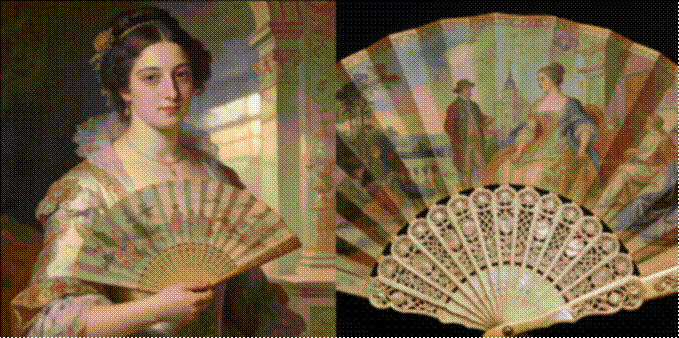
From the 16th century onward, Chinese folding fans became a sensation in European noble circles, sparking a “China fever” that lasted for centuries . Queen Elizabeth I of England was an avid collector, owning 27 Chinese folding fans, while Empress Elisabeth of Austria (Sissi) frequently adorned herself with them . Beyond their aesthetic appeal, these fans evolved into a unique form of communication—”fan language”—in 18th-century Europe. A slow wave meant “I am taken,” while placing an open fan across the cheek signaled “I love you” . Dropping a fan intentionally invited friendship, and tapping the fan handle to one’s lips meant “Kiss me” . This silent language turned Chinese fans into indispensable social tools, proving their ability to transcend cultural barriers.
European craftsmen soon began imitating Chinese fans, blending Eastern structures with Western motifs—such as painting European nobles on silk fan faces . Today, antique Chinese fans remain prized collections in museums worldwide, serving as tangible evidence of East-West cultural exchange. As the saying goes, “A fan is not just for stirring air, but for stirring hearts” —this sentiment resonates across centuries, highlighting the universal appeal of Chinese ICH hand fans.
Heritage and Innovation: Breathing New Life into Tradition
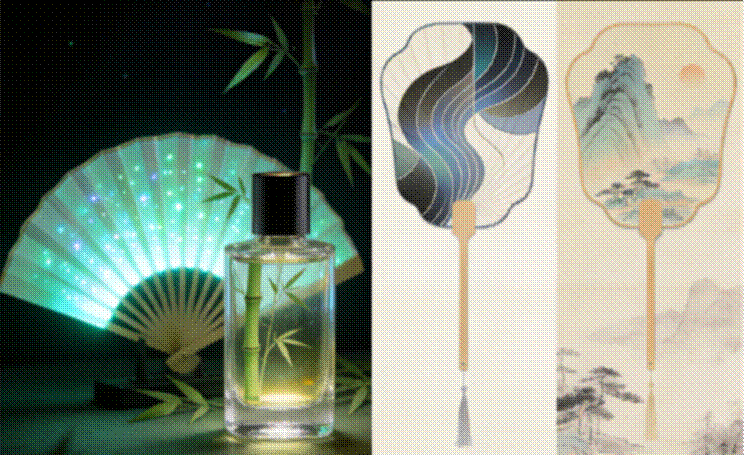
In an era of air conditioning and mass production, Chinese ICH hand fans face the challenge of staying relevant. However, inheritors are finding innovative ways to preserve and promote this ancient craft. Wang Hongbing, the 5th-generation inheritor of Wang’s Folding Fan, has collaborated with luxury brands like Estée Lauder and Shiseido, creating custom fans that blend traditional craftsmanship with modern design . His daughter, Wang Yaling, developed glow-in-the-dark fans for concert audiences, introducing the art to younger generations. She also teaches fan-making in primary and vocational schools, having inspired over 4,000 students .
Technological advancements are also aiding preservation. Wang Hongbing uses AI tools like DeepSeek to design fan patterns, while retaining core handcrafting techniques . The family has also expanded into related products, such as bamboo-scented perfume and smart fans embedded with chips, proving that tradition and innovation can coexist. As Lady P’an’s poem A Present from the Emperor’s New Concubine laments the fan’s fate of being discarded in autumn , modern inheritors are ensuring that Chinese ICH hand fans never suffer such neglect—instead, they are thriving in a globalized world.
Conclusion: Embracing the Timeless Charm of Chinese ICH Hand Fans
A Chinese ICH hand fan is more than an accessory—it is a living testament to centuries of craftsmanship, a symbol of cultural exchange, and a bridge between past and present. From the ancient bamboo fans of the Eastern Zhou Dynasty to the innovative designs of today, these fans carry the wisdom of generations, embodying the Chinese values of harmony, precision, and beauty. As we admire their intricate patterns and feel their smooth textures, we are reminded of the importance of preserving intangible cultural heritage—for it is these traditions that connect us to our roots and enrich our global culture.
Whether displayed as a work of art, used to cool oneself on a hot day, or given as a gift, a Chinese ICH hand fan invites us to slow down, appreciate the beauty of handcraftsmanship, and celebrate the diversity of human creativity. As Guo Moruo so aptly put it, their craftsmanship is “beyond divine creation” —let us cherish and support these timeless treasures, ensuring they continue to whisper stories of culture and art for centuries to come.