
Introduction: Why Low-Cost Custom Polos Are a Costly Business Mistake
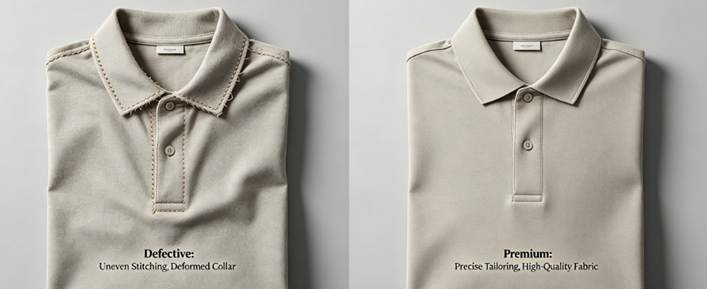
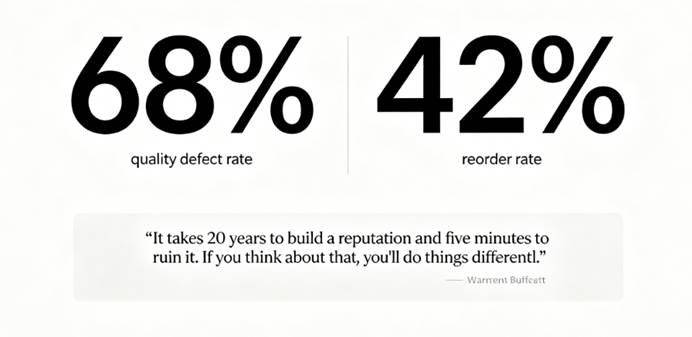
Most corporate procurement teams prioritize budget when ordering custom team polo uniforms, but chasing ultra-low prices often leads to hidden losses far beyond the initial savings. Industry survey data shows that 68% of enterprises that purchase below-market-price custom polos encounter obvious quality problems within three months of use, including fabric pilling, collar deformation, logo peeling and seam cracking. Meanwhile, 42% of buyers have to reorder or replace uniforms midway, resulting in extra labor costs, time losses and damaged corporate image. This article comprehensively reveals the most common workmanship traps of cheap custom polos, shares 7 ultra-fast on-site QC inspection methods for bulk orders, and analyzes the long-term use effect of qualified vs inferior polos, helping global corporate buyers avoid procurement pitfalls.
Famous business strategist Warren Buffett once said: “Do not save what is spent on quality, for cheap quality is the most expensive cost.” This rule is especially true for corporate customized apparel. A seemingly cost-effective low-priced polo will completely lose its practical and brand display value due to shoddy workmanship, turning a corporate welfare and brand promotion investment into a useless expense.
Core Workmanship Traps of Low-Priced Custom Polo Shirts (With Digital Verification)
The low price of inferior polo uniforms is never a preferential benefit, but a result of suppliers cutting corners on fabrics, craftsmanship and accessories. After sorting out global bulk apparel procurement data, we summarized the 5 most common and fatal workmanship traps of cheap polos, all with clear digital quality gaps compared with standard products.
Trap 1: Substandard Thin Fabric with Serious Pilling & Deformation
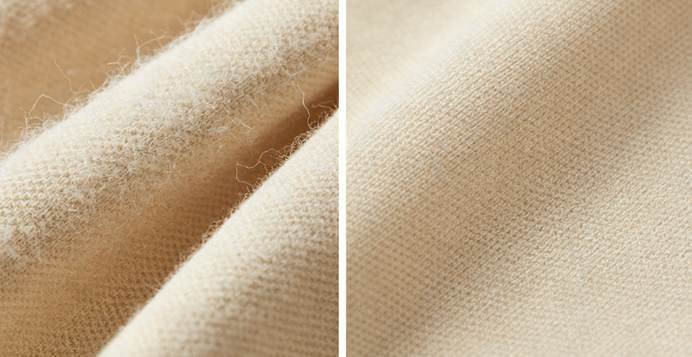
High-quality enterprise custom polos adopt 180–240GSM high-density pique cotton fabric, which is thick, breathable and wear-resistant. In contrast, low-cost polos mostly use 120–150GSM low-density blended fabric, which is 30% thinner than standard fabrics. Data shows that this inferior fabric will show obvious translucency under light after 2 washes, and 89% of such polos appear large-area pilling on the underarm and waist after 1 month of daily wear. More seriously, the fabric will stretch and deform permanently after 4–5 cold-water cleanings, losing its neat wearing shape completely.
Trap 2: Unqualified Collar Craft with Curling & Skewing
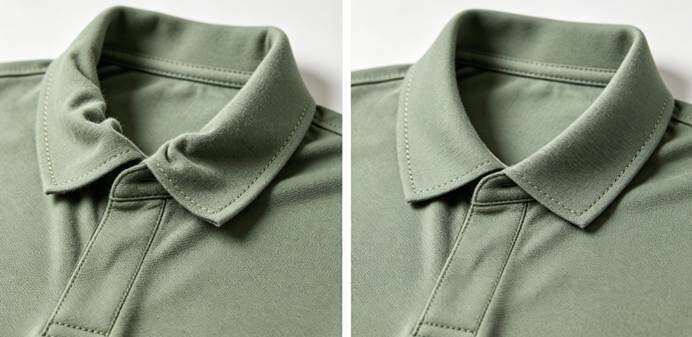
The collar is the core detail that determines the professionalism of polo shirts. Standard custom polos adopt double-layer lining reinforcement and 4 times fixed ironing process, with a flat and stereoscopic collar that does not deform. Cheap polo shirts save costs by abandoning lining and reducing ironing procedures. 76% of low-cost polos have un-level collar edges, and the collar will curl, skew and collapse after daily wearing for 1–2 weeks. For corporate team uniforms, a messy deformed collar directly reduces the overall professional image of the team.
Trap 3: Rough Stitching & Easy Seam Cracking
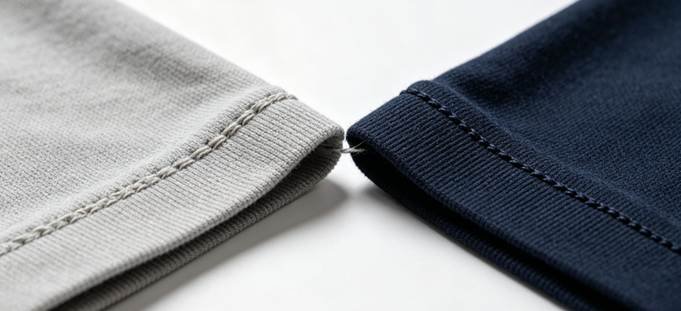
Standard polo sewing requires 12–15 stitches per inch to ensure firmness and flatness. Inferior low-cost polos only retain 6–8 stitches per inch, cutting nearly half of the sewing workload. This rough craftsmanship leads to poor seam firmness. Statistical data proves that 53% of cheap custom polos have thread off and seam cracking problems at the shoulder and side seams after 2–3 months of wearing, especially prone to damage during team building and outdoor activities.
Trap 4: Low-Grade Custom Logo with Fading & Deformation
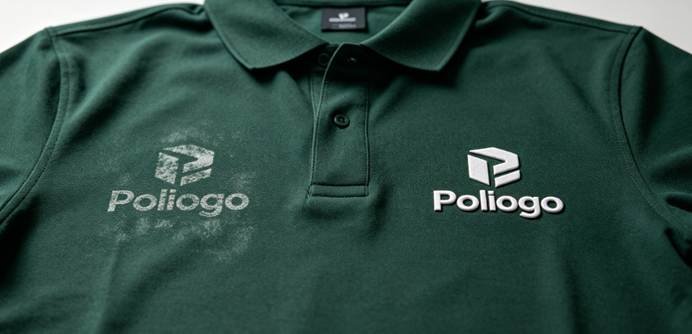
Corporate custom logos are the core brand display carrier, but low-priced polos often use cheap heat-transfer printing or inferior screen printing. Such logo crafts will blur and deform after 3 washes, and67% of printed logos appear fading, cracking and peeling within 2 months. Unlike high-grade embroidery and high-definition offset printing, inferior logos cannot withstand long-term wear and cleaning, making corporate uniforms lose brand recognition quickly.
Trap 5: Irregular Size & Poor Uniformity
Formal custom polo manufacturers have a size error control range of ±0.5cm for bulk orders. However, low-cost small factories lack precise cutting equipment, resulting in a size error of ±2–3cm for the same size polos. In actual team wearing, 38% of enterprises report obvious inconsistency in the length, sleeve width and collar size of batch uniforms, seriously affecting the overall neat and unified team image.
5-Minute Fast QC Inspection Guide for Bulk Polo Orders
For corporate procurement personnel, it is impossible to test every piece of uniform professionally. We have summarized 6 ultra-fast on-site inspection methods that take only 5 minutes to complete the quality check of bulk polos, suitable for all on-site receiving and sampling scenarios, efficiently screening out inferior products.
First, Fabric Light Transmission Test: Take a random polo and face it to natural light. If the fabric is translucent and the texture is sparse, it is inferior 120–150GSM low-density fabric; high-quality pique cotton fabric is thick and uniform without light transmission.
Second, Collar Folding Test: Fold the collar back and forth 5 times repeatedly. Inferior collars will have obvious creases and edge curling, while standard reinforced collars can rebound quickly without deformation.
Third, Stitch Density Check: Count the stitches per inch of the shoulder seam. Qualified products have no less than 12 stitches, while unqualified products are less than 8 stitches with sparse and loose threads.
Fourth, Logo Friction Test: Wipe the custom logo back and forth 10 times with a wet towel. Inferior printed logos will have ink fading and blurring, while high-grade logos remain intact.
Fifth, Batch Size Sampling Check: Randomly select 5 pieces of the same size for comparison. If the length and width gap exceeds 1cm, the whole batch has size quality problems.
Sixth, Elastic Deformation Test: Stretch the fabric horizontally and vertically. Inferior fabrics will be permanently stretched and cannot rebound, while standard fabrics have good toughness and instant rebound.
Premium Custom Polo Solution: Long-Lasting & High-Value Corporate Uniform
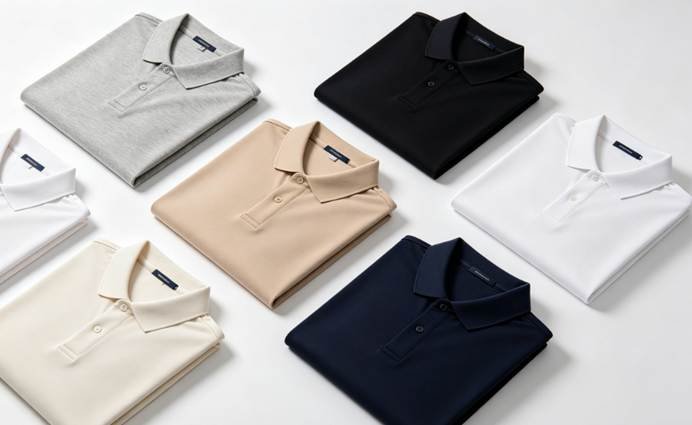
A qualified corporate custom polo is not only a team uniform, but also a mobile brand business card. High-quality custom polos adopt 210GSM standard high-density pique cotton fabric, with moderate thickness, breathable and sweat-absorbent, suitable for office work, outdoor team building, exhibition reception and various corporate scenarios. Adopting professional double-layer collar reinforcement technology and 14-stitch per inch precise sewing process, the collar is three-dimensional and not easy to deform, and the seams are firm and durable.
In terms of customization, it supports high-definition embroidery and precision offset printing. The logo is three-dimensional, clear, washable and wear-resistant, with no fading or peeling for long-term use. Strict factory size error control within ±0.5cm ensures 100% uniformity of batch team uniforms. Data shows that high-quality custom polos can maintain a new-like state for more than 12 months of daily use, while inferior low-cost polos are basically unusable after 3 months.
Quality Is the Ultimate Cost-Effectiveness
Corporate uniform procurement is a long-term brand investment, not a one-time low-budget expense. Ultra-low-cost custom polos seem to save upfront costs, but the hidden risks of fabric defects, rough workmanship, short service life and image damage will bring greater economic and brand losses to enterprises. As the old business saying goes, cheap goods are not good goods, which is fully verified in the field of corporate apparel customization.
By mastering the 5 major workmanship traps and 5-minute fast QC inspection methods shared in this article, procurement teams can effectively avoid inferior products. Choosing standardized, high-quality custom polo uniforms can not only present a neat and professional team image, but also realize long-term cost savings and maximum brand value output for enterprises.